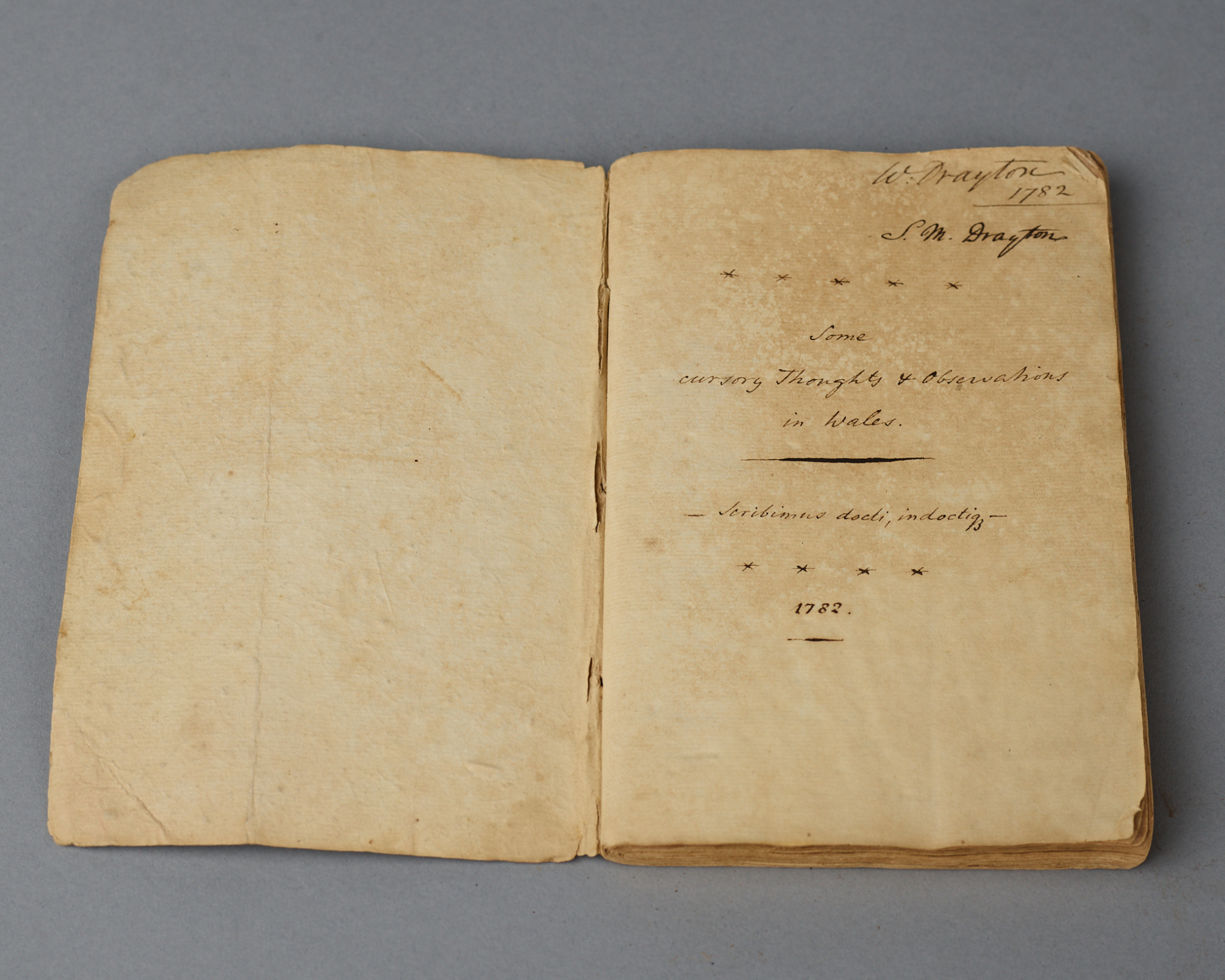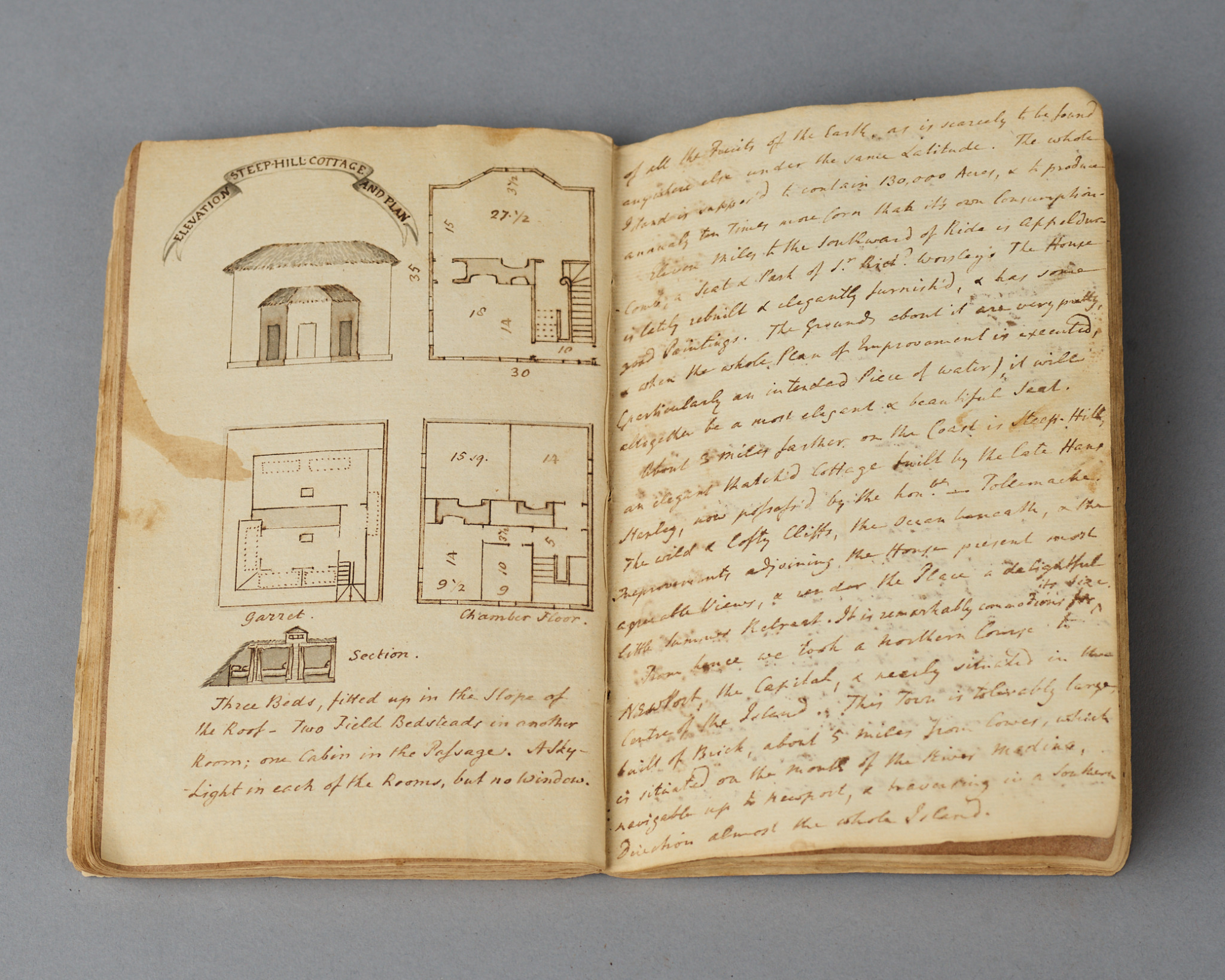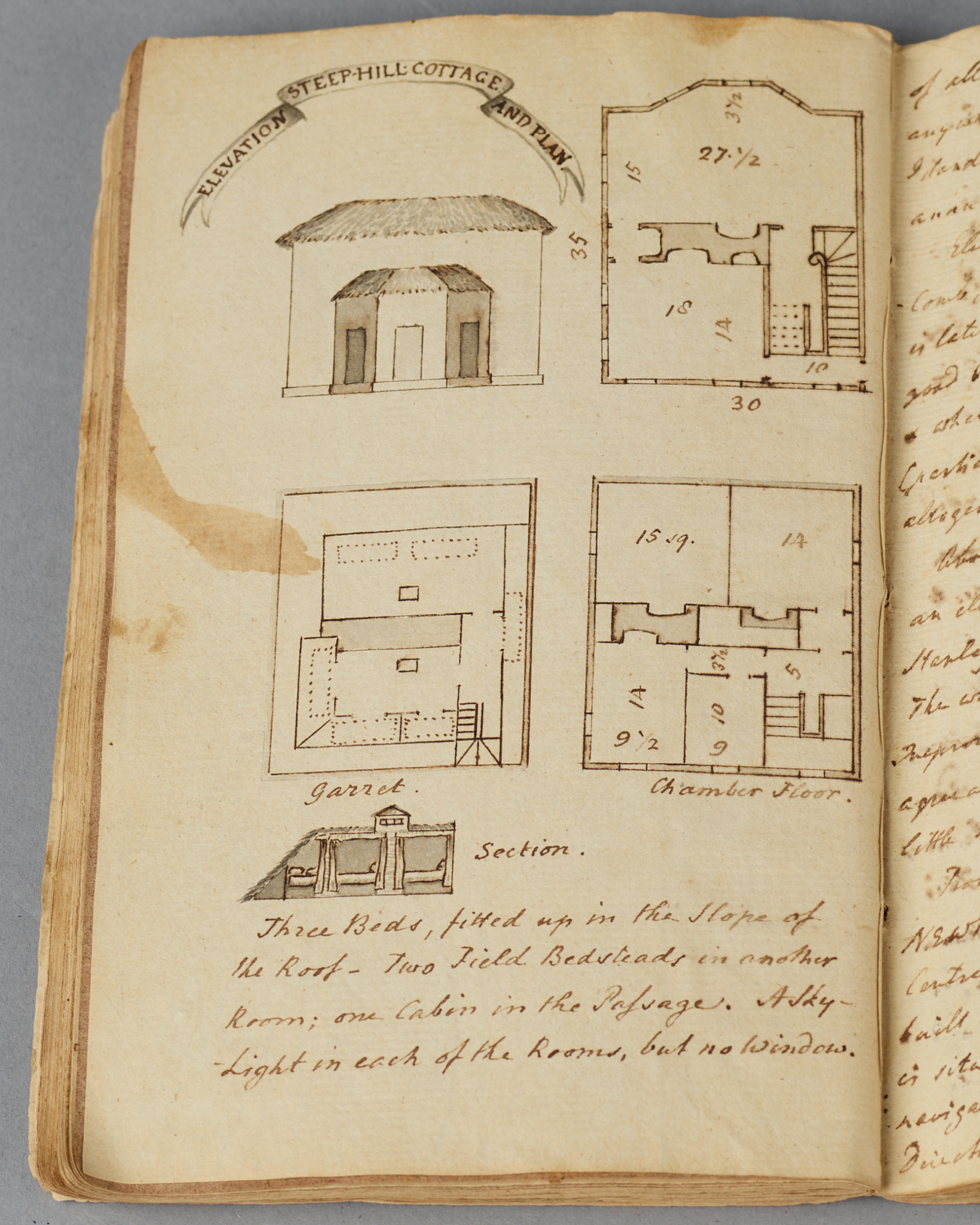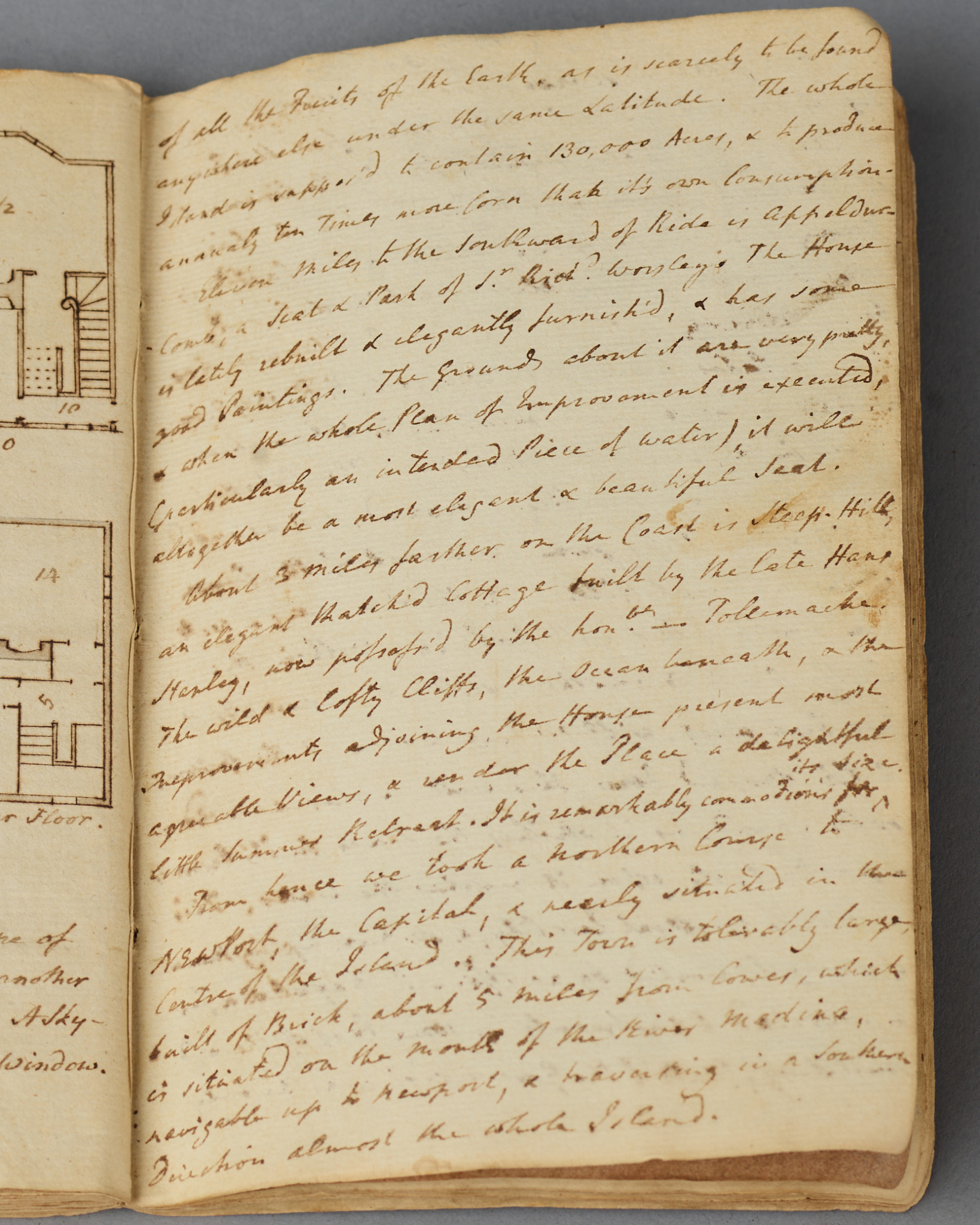
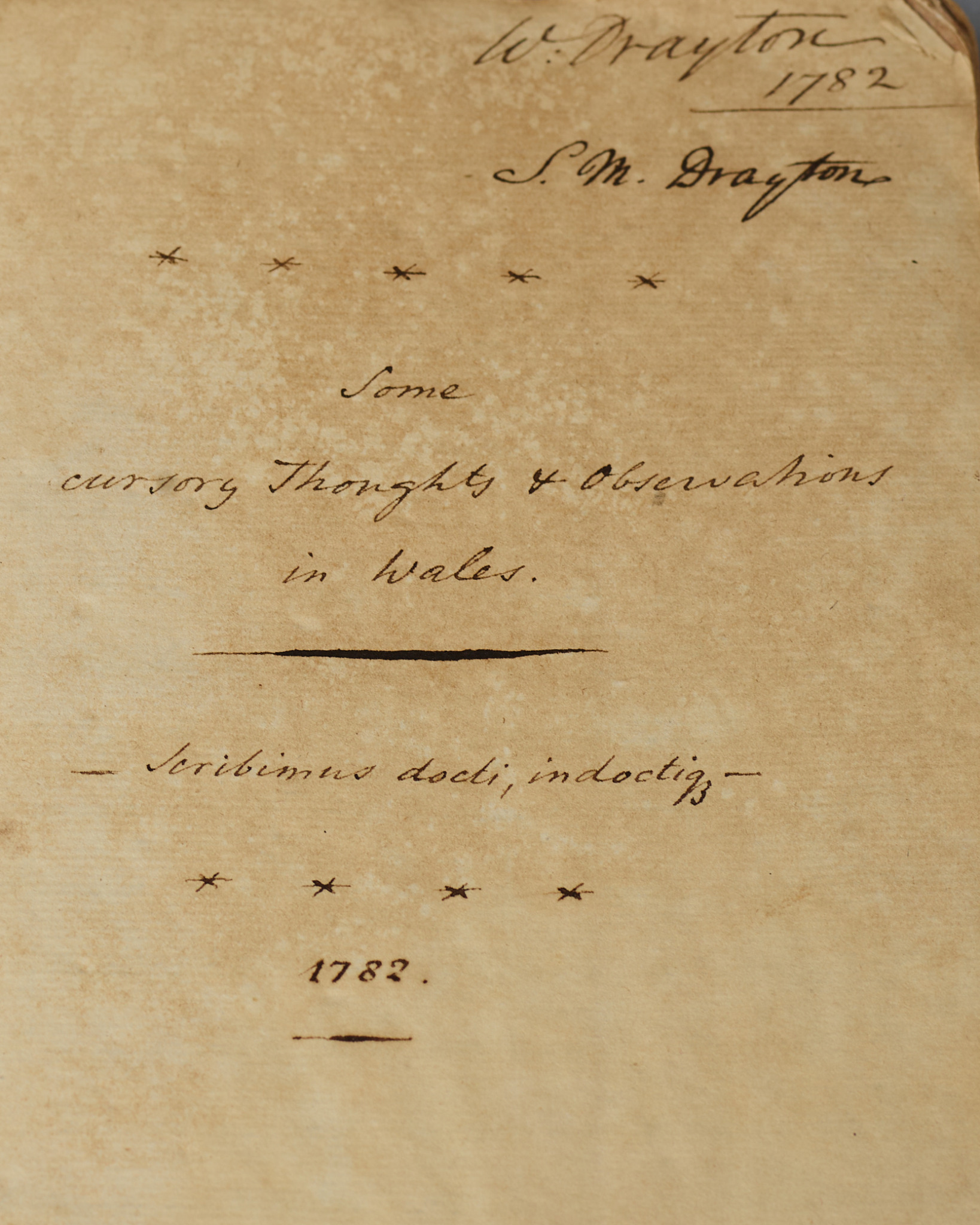
Some cursory Thoughts + Observations in Wales
Volume One (Vol Two in the Collection of the SC Historical Society)
Bound, Unpublished Manuscript ~ 55 pages
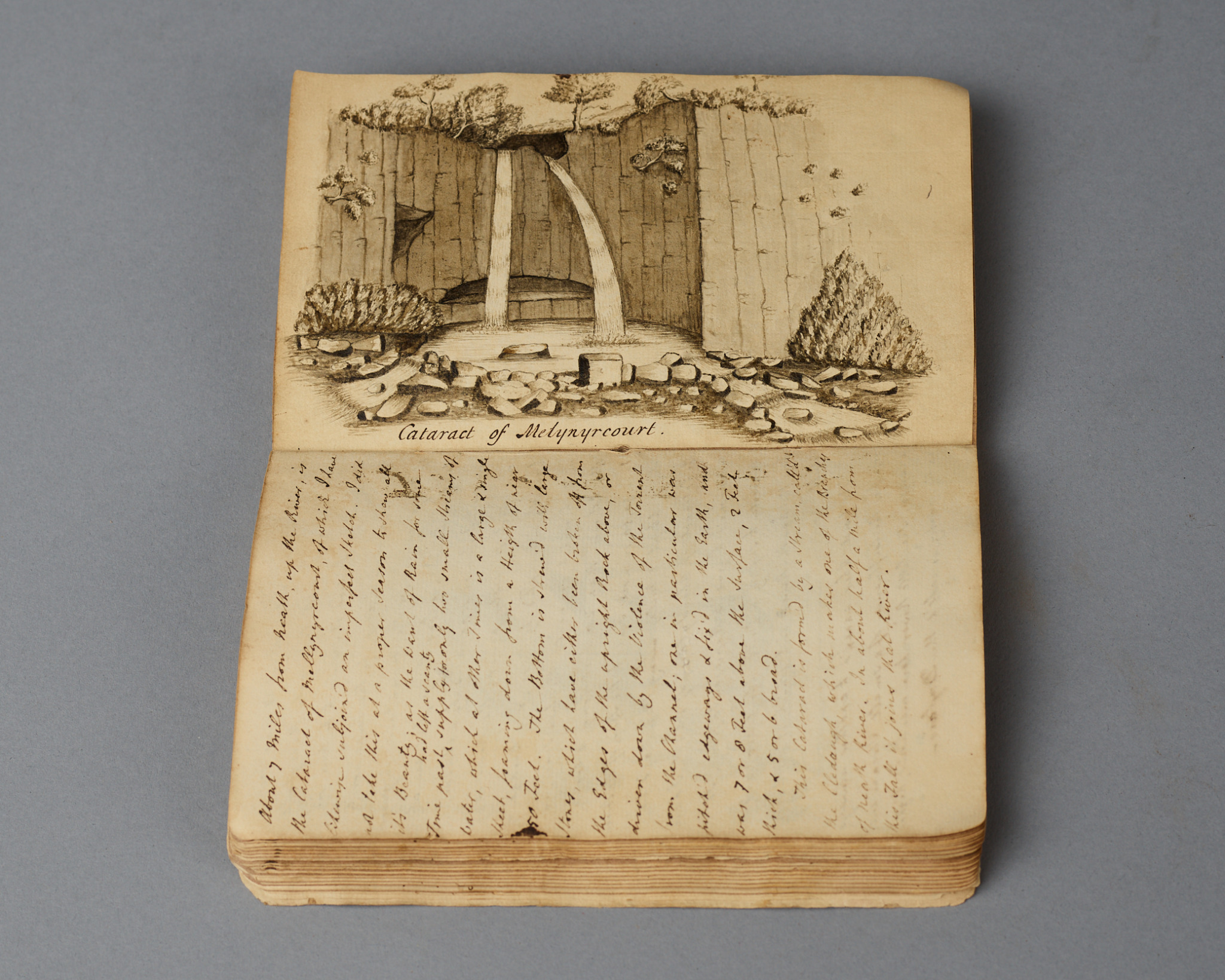
Pen and Ink on paper with illustrations
Signed “W. Drayton/1782” (William Drayton 1732-1790) & S. M. Drayton (later)
4.75 x 7.25”
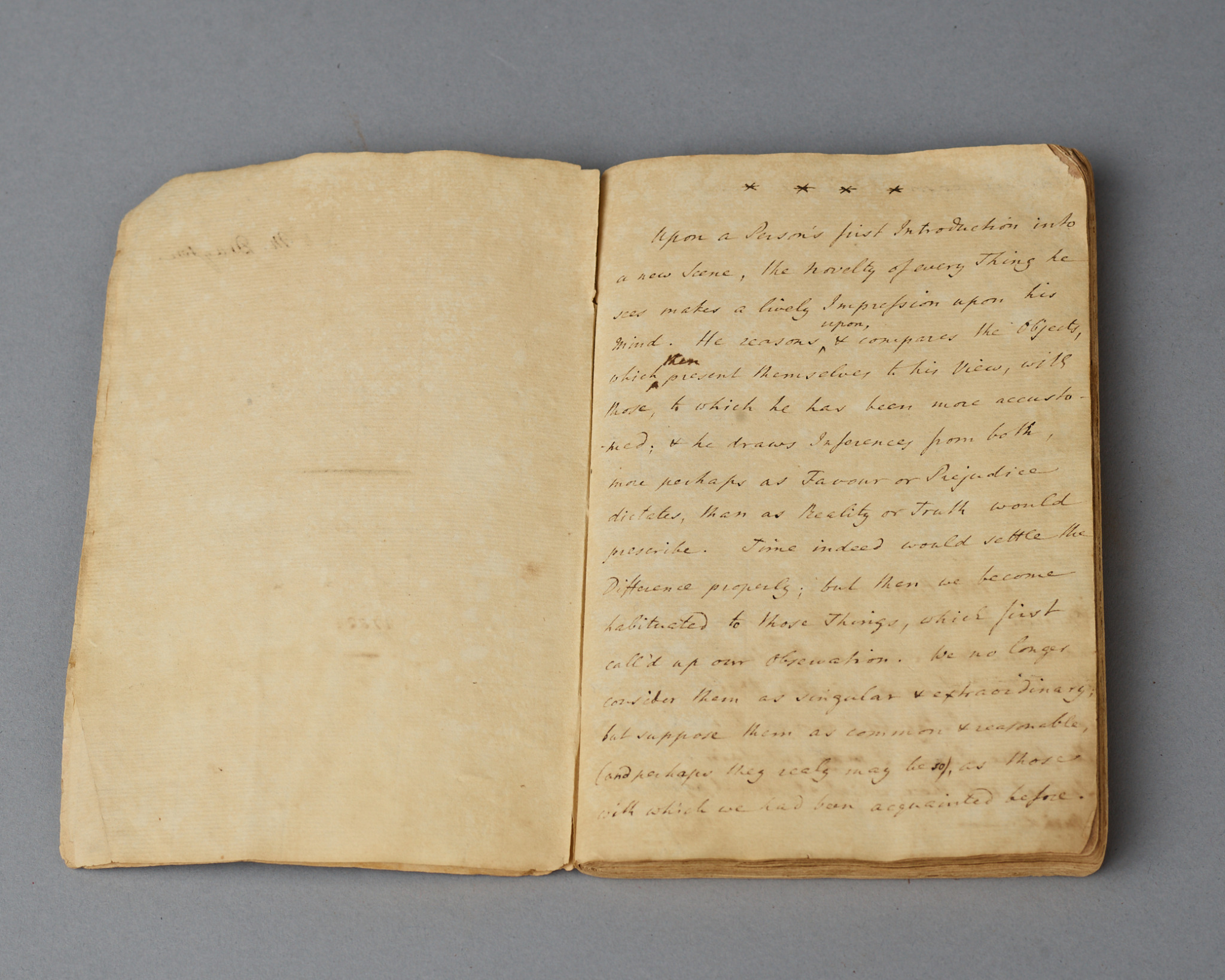
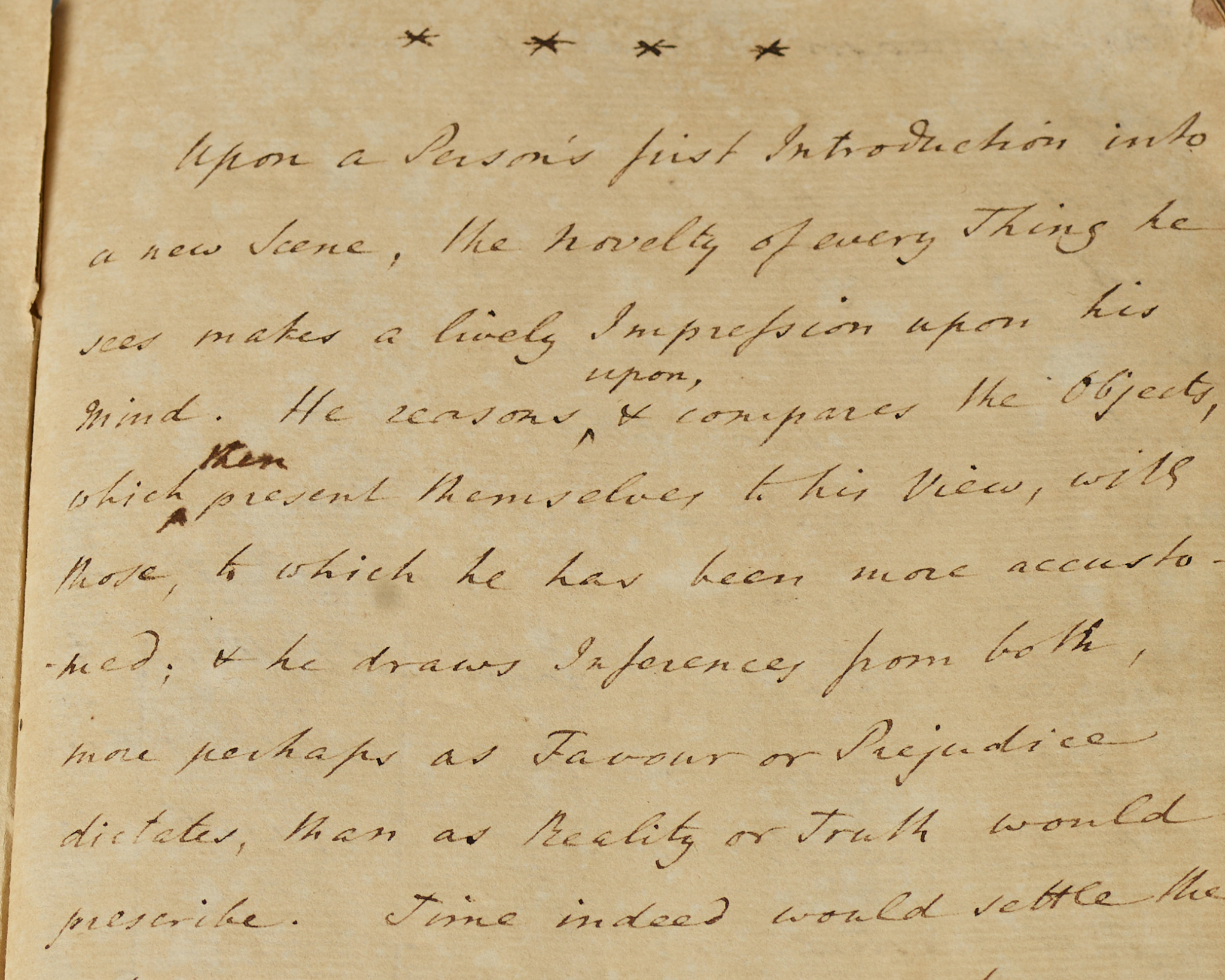
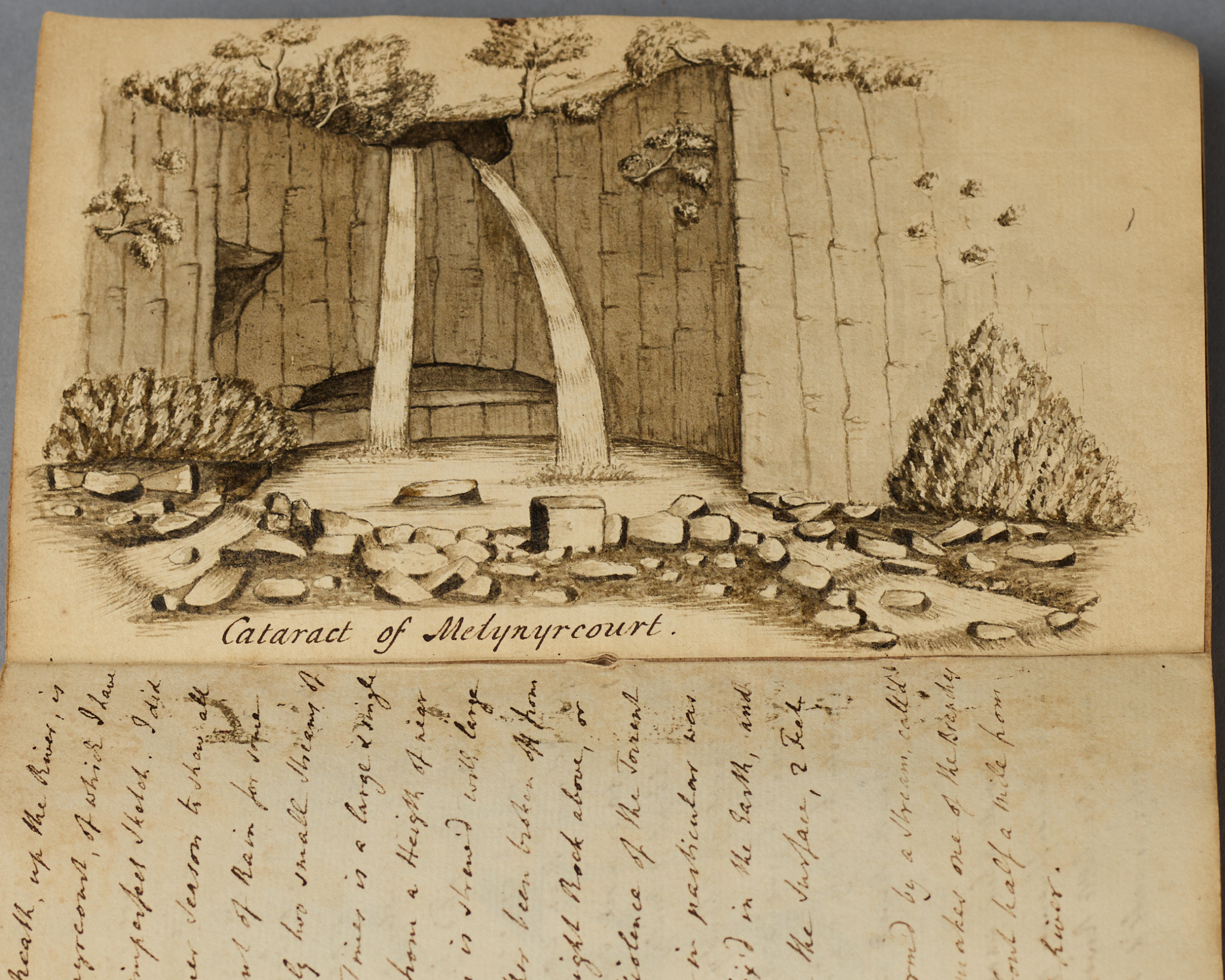
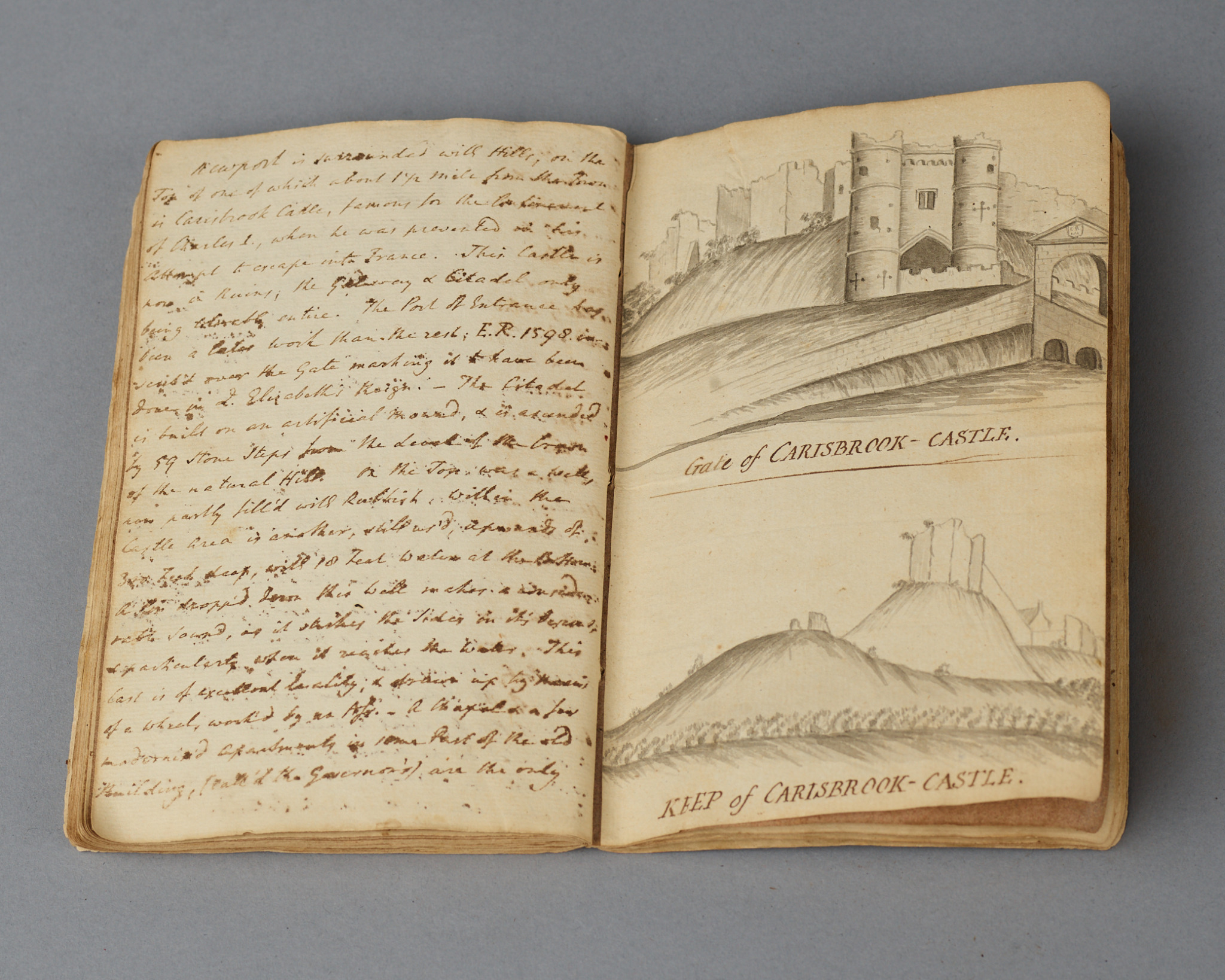
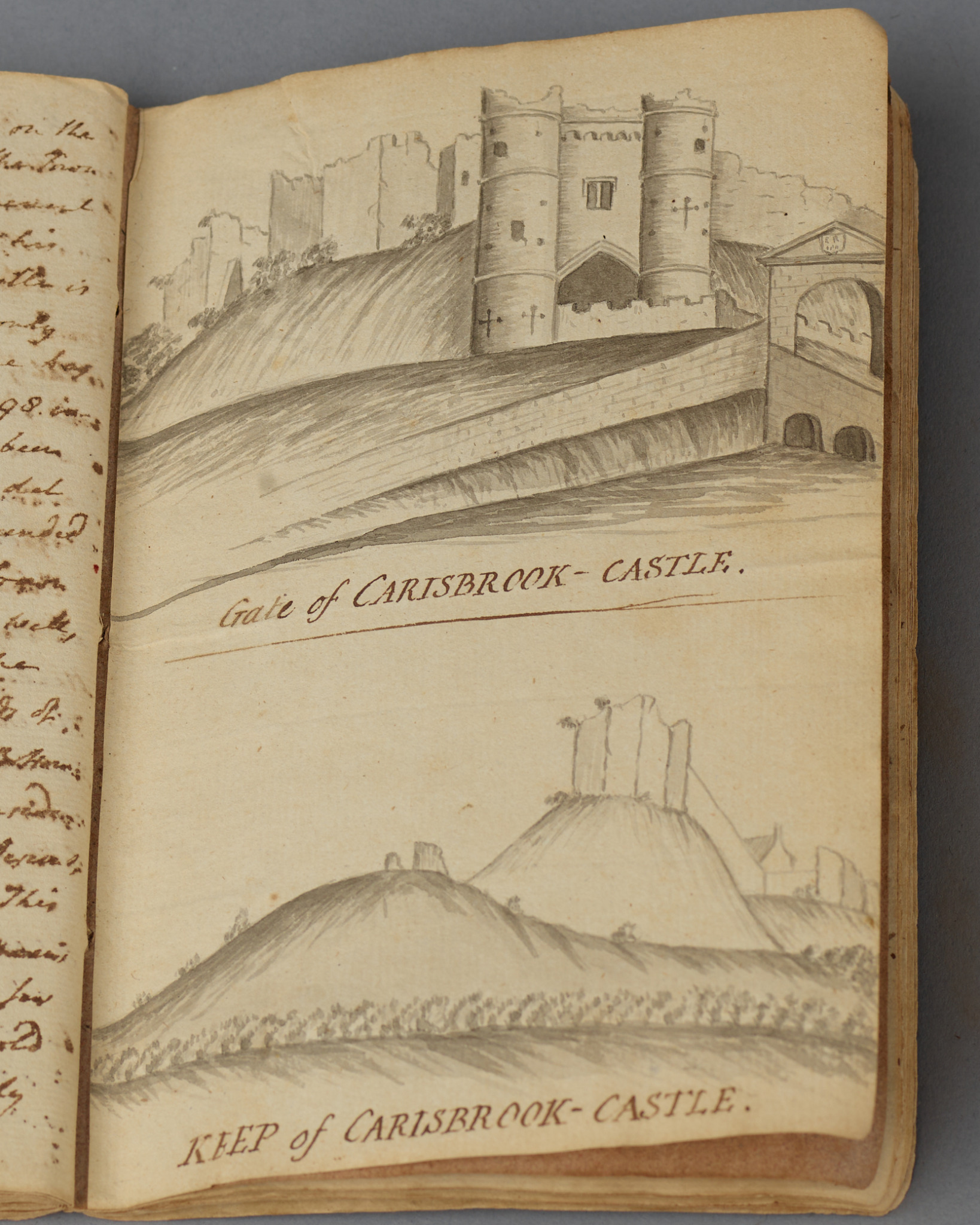
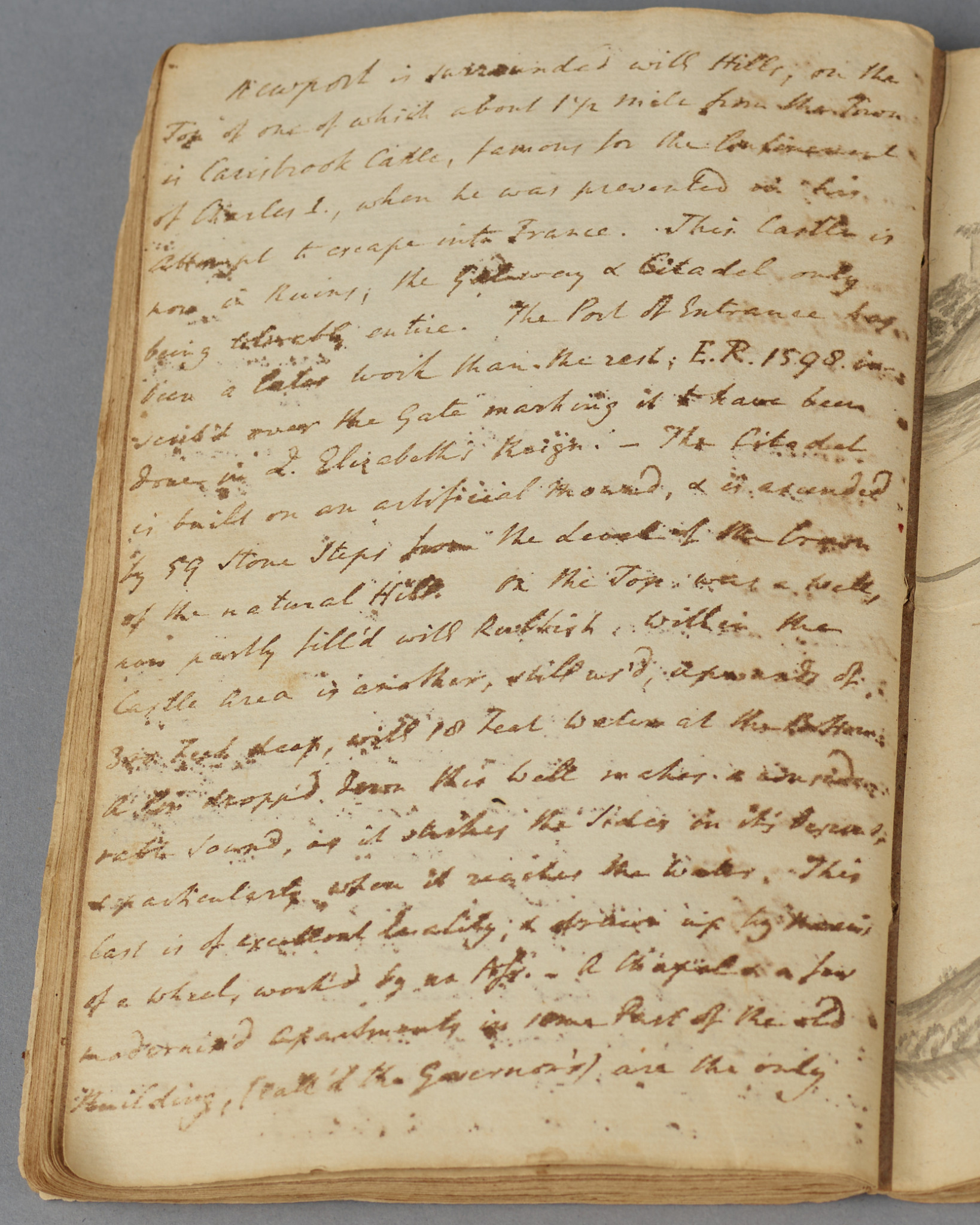
The larger circumstances of Drayton’s travels to Great Britain and tour of Wales in July 1782-March 1783 are unrecorded and remain unclear, but his interesting observations and skillful illustrations in the two volumes detailing his travels in Wales must and do speak for themselves of the man and his journey. In introducing the first volume he provides no real suggestion of his motivations, possible companions or the context and implies only that he is embarking on his first visit to Wales, explaining that he intends for his Journal to record his “first ideas’ of the “videt et urbes” (sights and cities) as he experiences them. In addition to the ~ 39 pages and 7 illustrations relating to his visit to Wales, Drayton added to Volume One of his journal in July 1783 “Observations in the Isle of Wight, + Parts of Hampshire” which he visited en route from London to Spithead where he had his “Passage to Carolina.”
Volume Two of Drayton’s Journal, now in the collection of the South Carolina Historical Society, Charleston (“Tour thro’ South Wales, 1782-1783. Manuscript 34/0629), was the subject of a two part article published the Royal Institution of South Wales’ Swansea History Journal Volume 21, 2013/14 & Volume 22, 2014/15.
In this article the author also notes the difficulty of establishing the purpose of Drayton’s visit and suggests that based on the texts of his other known travel journals the principal motives were pleasure and his curiosity regarding Welsch agriculture and society. . Drayton displayed a lifelong interest in developing the agricultural economy in the American colonies as evidenced by his correspondence in his role as Chairman of the South Carolina Agricultural Society. Drayton and Jefferson exchange views regarding their shared interest in introducing and cultivating new species such as cork that would prove profitable for southern farmers. While Swansea History Journal’s author had no knowledge of Volume One, what little additional evidence it provides certainly validates the conclusion that Drayton simply enjoyed travel and new experiences.
In light of his significant role and accomplishments it is a bit baffling that William Drayton, Sr. is not better known to history. Born into a prominent South Carolina family in 1732, he pursued a career in the law and became one of the most important regional jurists of the colonial and early Federal periods. Drayton studied law at Middle Temple, London and was admitted to the English bar in 1755. He returned to South Carolina where he served as Justice of the Peace of Berkeley County, 1756-1763; as Chief Justice of the Province of East Florida, 1763-1780; Judge of the South Carolina Admiralty Court, and in 1789 and as an associate judge of the South Carolina Supreme Court. In 1790 Drayton was nominated by George Washington as the first Federal judge of the US District Court for South Carlina and served from his Senate confirmation until his death in May of 1790. William Drayton married Mary Motte (1739-1778) …..with whom he would have ten children.
The colony of East Florida, which existed for only a couple of decades between the end of the Seven Years War and the end of the Revolutionary War, was a notable and likely among the most formative experiences of Drayton’s life. Little remembered today, the colony was largely populated by loyalists although Drayon seems to have gradually come to favor independence and an alignment with the neighboring colonies as the war progressed. The ambiguity of his position may best be as described by Charle Mowat in his “The Enigma of William Drayton”.
”He was both by birth and feeling an American, but his training was English, and he preferred to regard himself as a member of the British Empire, and, perhaps, the servant of the common law which, to Americans of the time, guaranteed the strongest of all forms of liberty, the rights of Englishmen. He found himself, however, in a province where one of those fundamental rights, that of representation in an assembly, was lacking, and against this lack his protest proved unavailing. When the American Revolution began, he was head of the judicature in a loyalist colony whose governor seemed to him the worst kind of tyrant, and he came to feel that the calamity of the Revolution was the result of the blunders and misdemeanors of just such tyrannical. governors in the other colonies. He continued, therefore, a policy of opposition to the local administration which he had begun partly over the matter of the assembly, partly as a result of a personal, though unexplained, quarrel.”
(Mowat, Charles L. (1943) “The Enigma of William Drayton,” Florida Historical Quarterly: Vol. 22: No. 1, Article 3. Available at: https://stars.library.ucf.edu/fhq/vol22/iss1/3)
Thank are due to Mr. Gerald Gabb of the Royal Institution of South Wales, Swansea for his kind assistance.