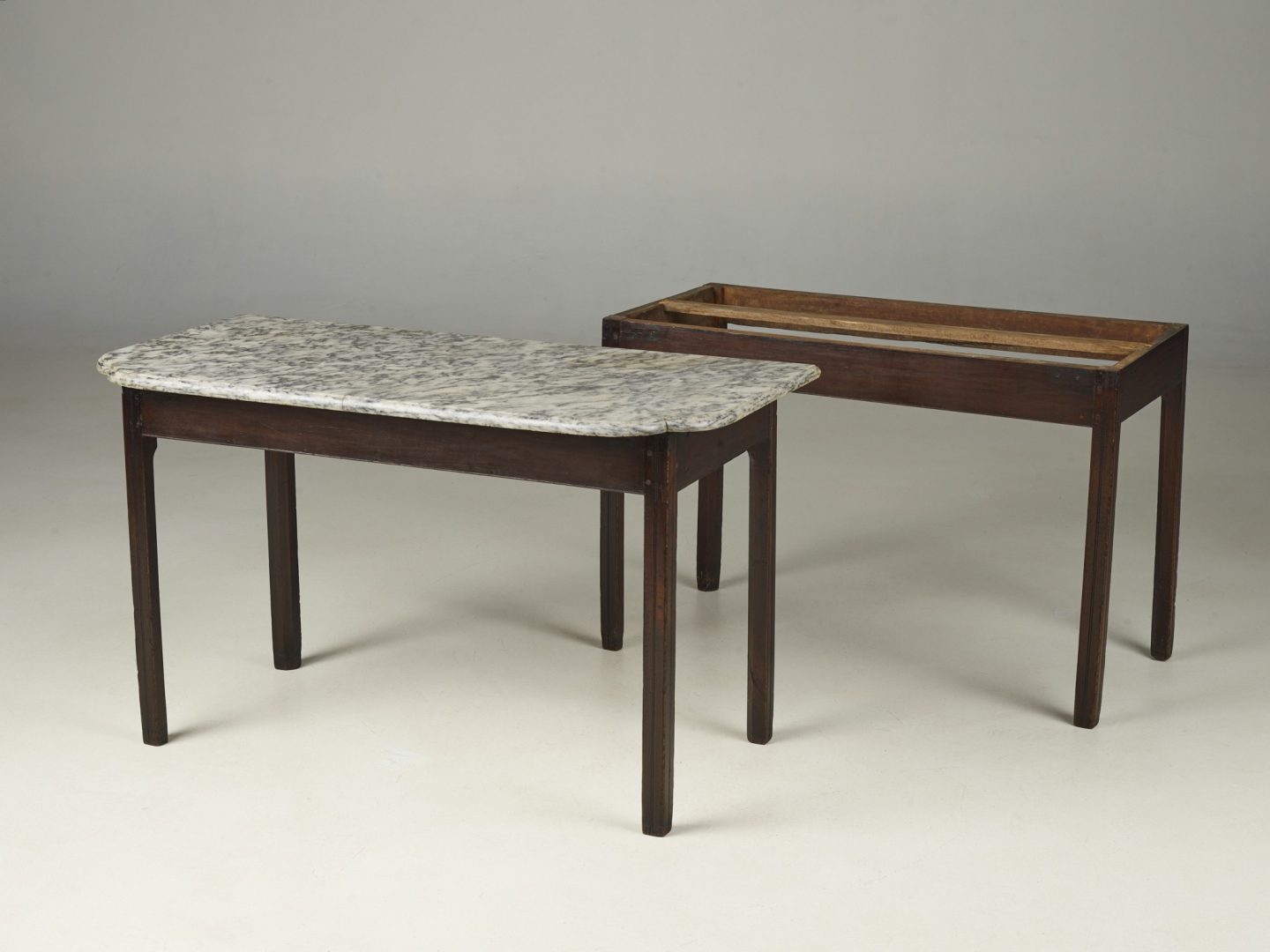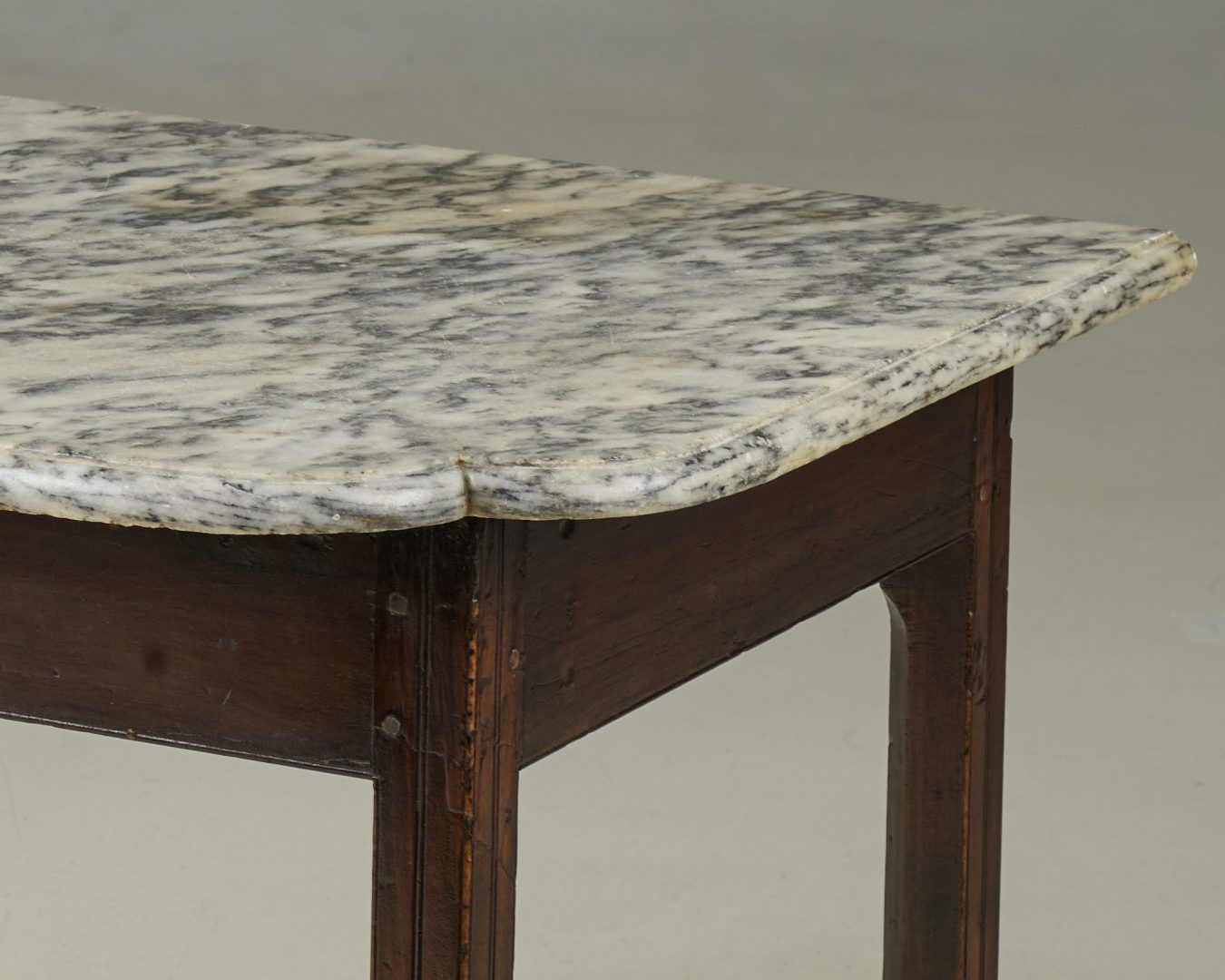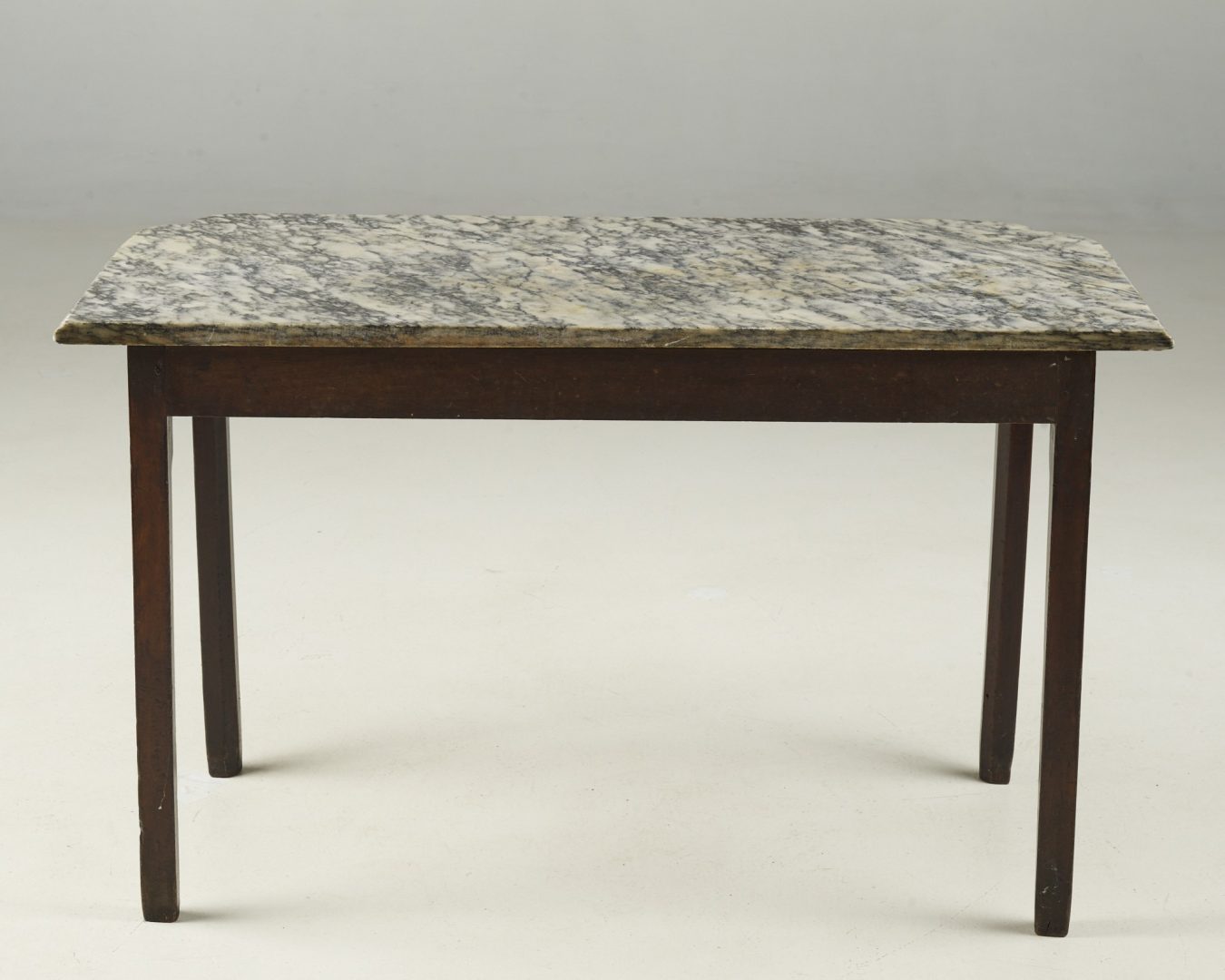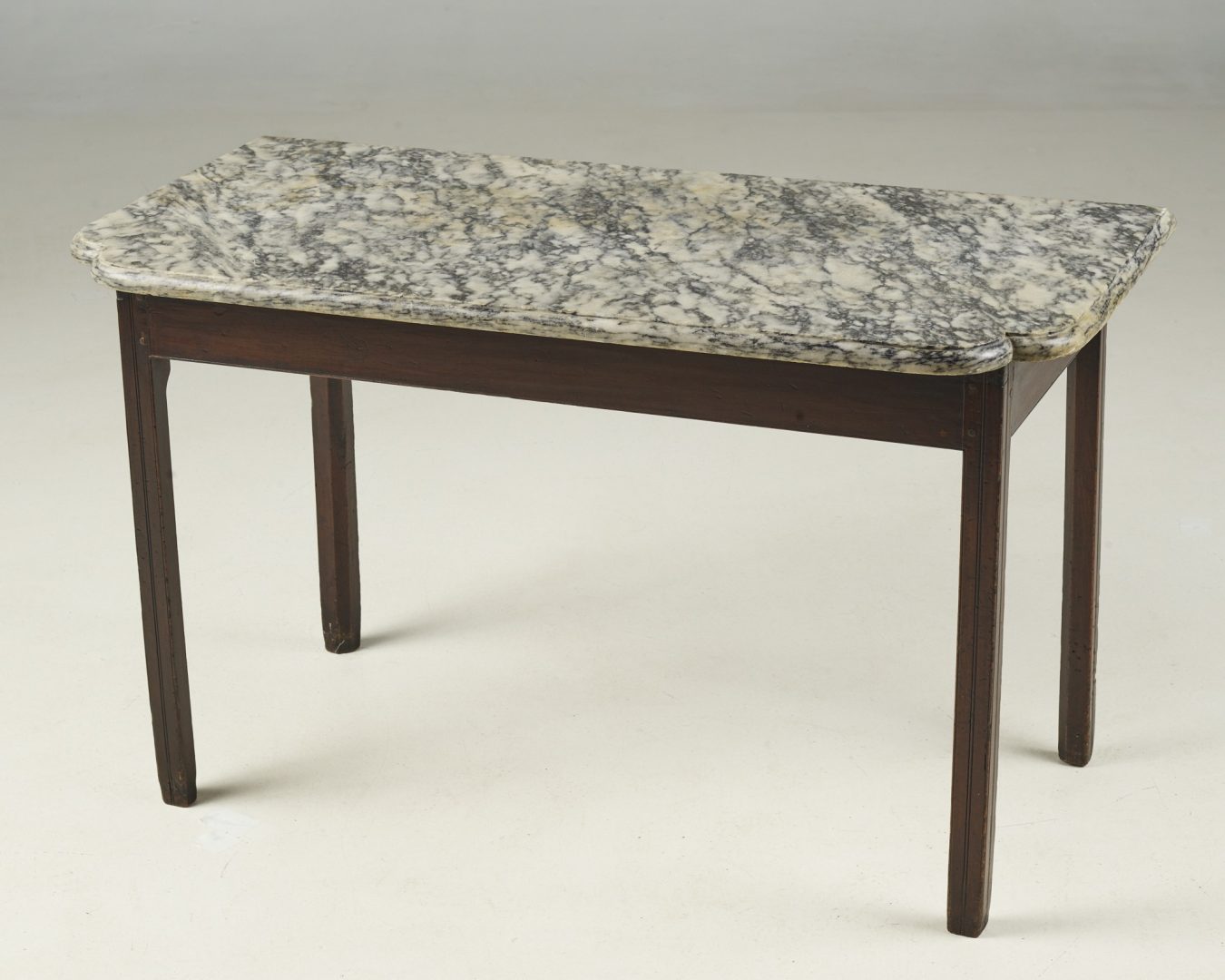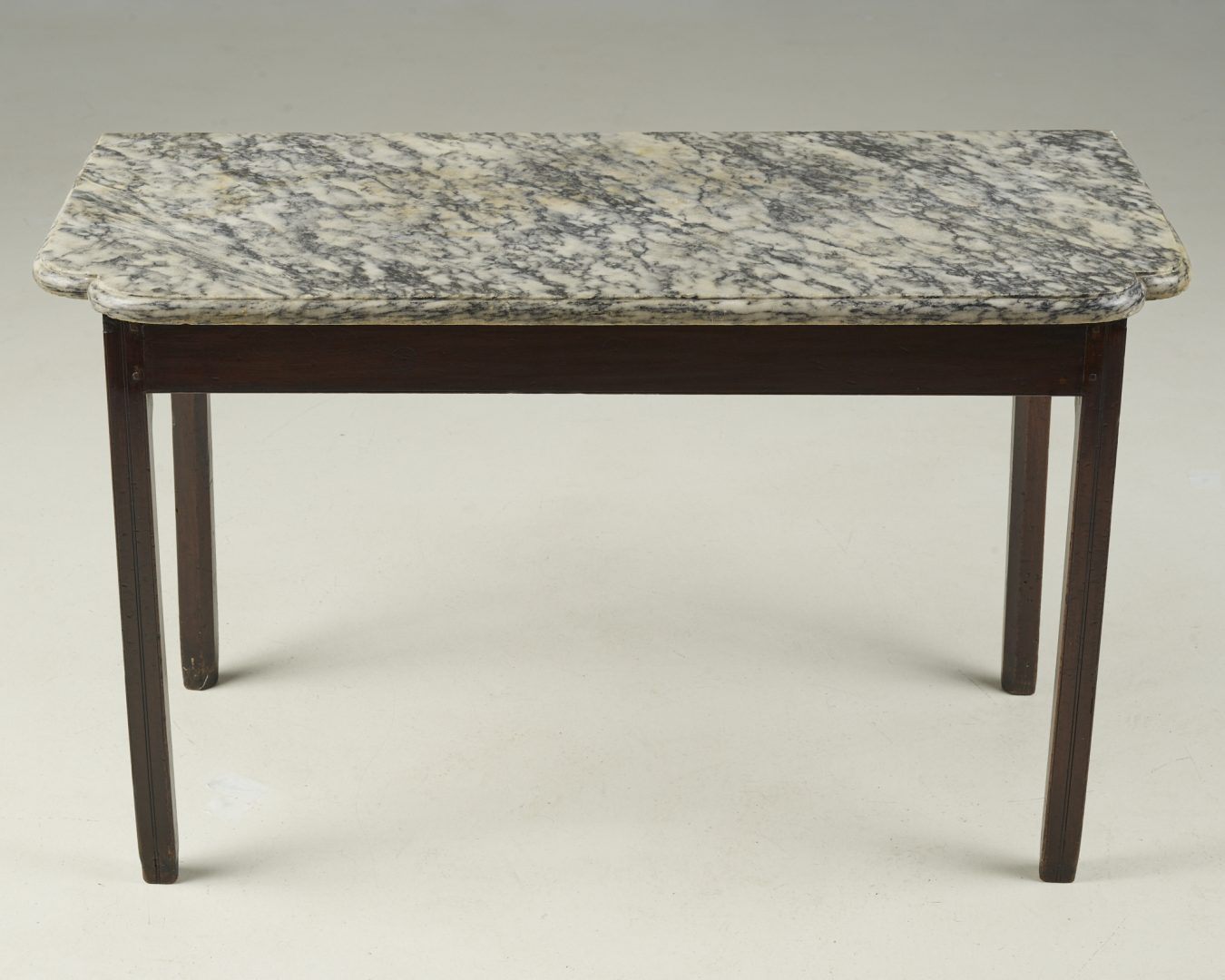
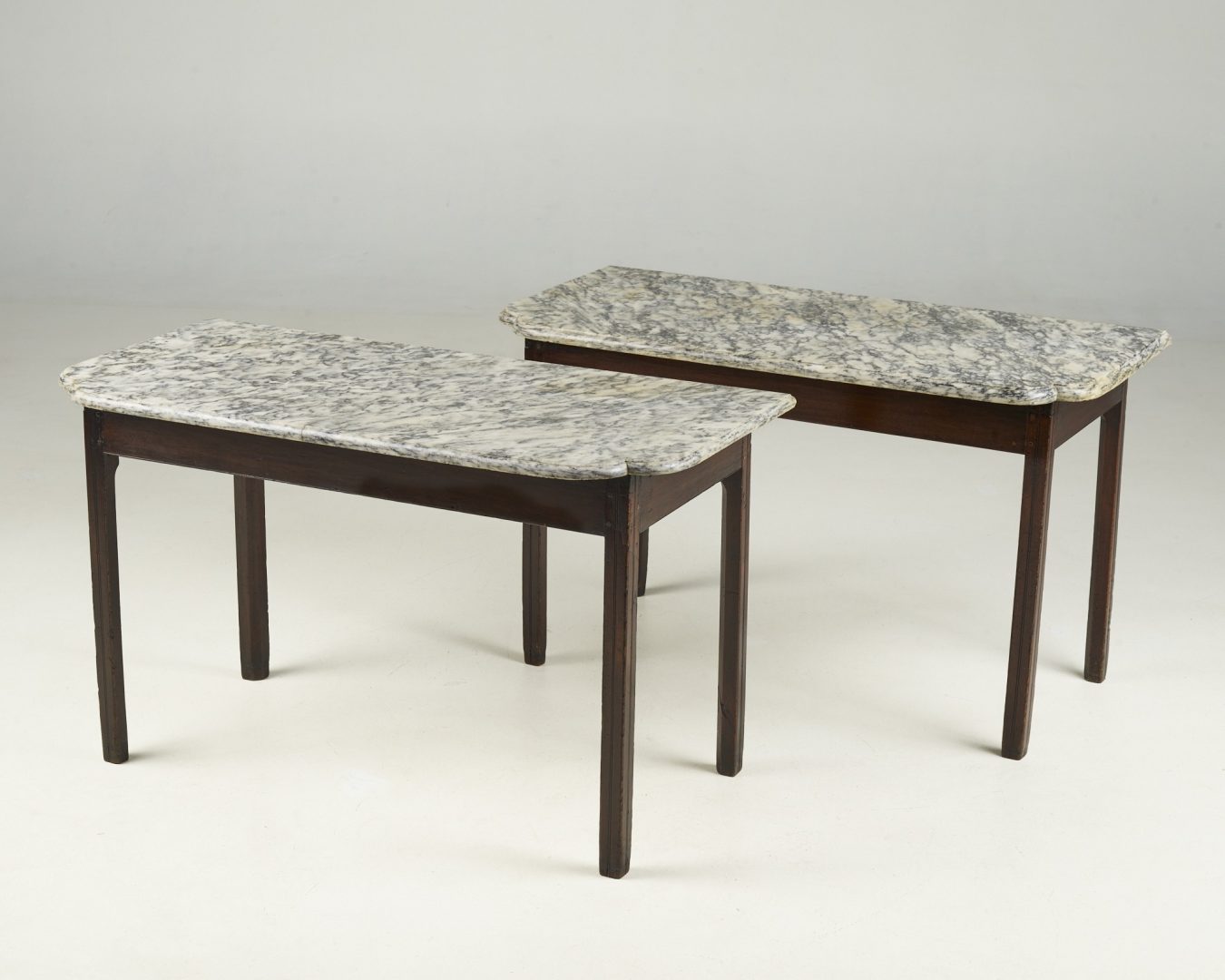
An Exceedingly Rare Pair of Virginia Marble Top Pier Tables
Cherry with Marble Tops
School of George Donald & Thomas Arbuthnot
Petersburg, Virginia. Circa 1770-1780
24” x 48”
By direct descent in a Southside Virginia Family
Rare survivors today, pier tables were frequently found in the homes of Virginia’s most prosperous 18th century gentry – often as pairs, and often with marble “slab “tops. The distinctly “Chinese” Chippendale style and emphasis on the “neat and plain” clearly demonstrates the influence of Williamsburg’s English and Scottish cabinetmakers on cabinet shops across eastern Virginia. This became more profound in the years following the burning of Norfolk by the British in 1776 and the relocation of cabinetmakers to the interior towns such as Petersburg; already a commercial center for the largely agricultural counties along the fall line. Petersburg and Richmond cabinetmakers offered stylish, well crafted, furniture to the wealthy landowners up and down the James, Appomattox and Roanoke rivers. This pair of pier tables were made for Woodlands, home of the Cocke/Archer Familes in Amelia County, just a few miles south west of Petersburg and Richmond. A stylish Petersburg side chair, now in the collection of Colonial Williamsburg, has a similar Cocke/Archer Family provenance.
George Donald and Thomas Arbuthnot, who shared Scottish heritage and very probably social and professional ties, were among the earliest and most well connected cabinet makers in Petersburg in the period. As outlined in her MESDA research note on The Scottish Cabinetmaking School of Colonial Richmond and Petersburg, Virginia, April Strader Bullin makes a strong case for attributing an important writing desk owned by Thomas Jefferson and at least five other tables to this school. These pier tables share several distinctive features with the larger group including the unusual double struck bead on each leg, chamfering and possibly decorative corner brackets, although the physical evidence was obscured by iron reinforcing brackets added in the early 19th century – now removed.