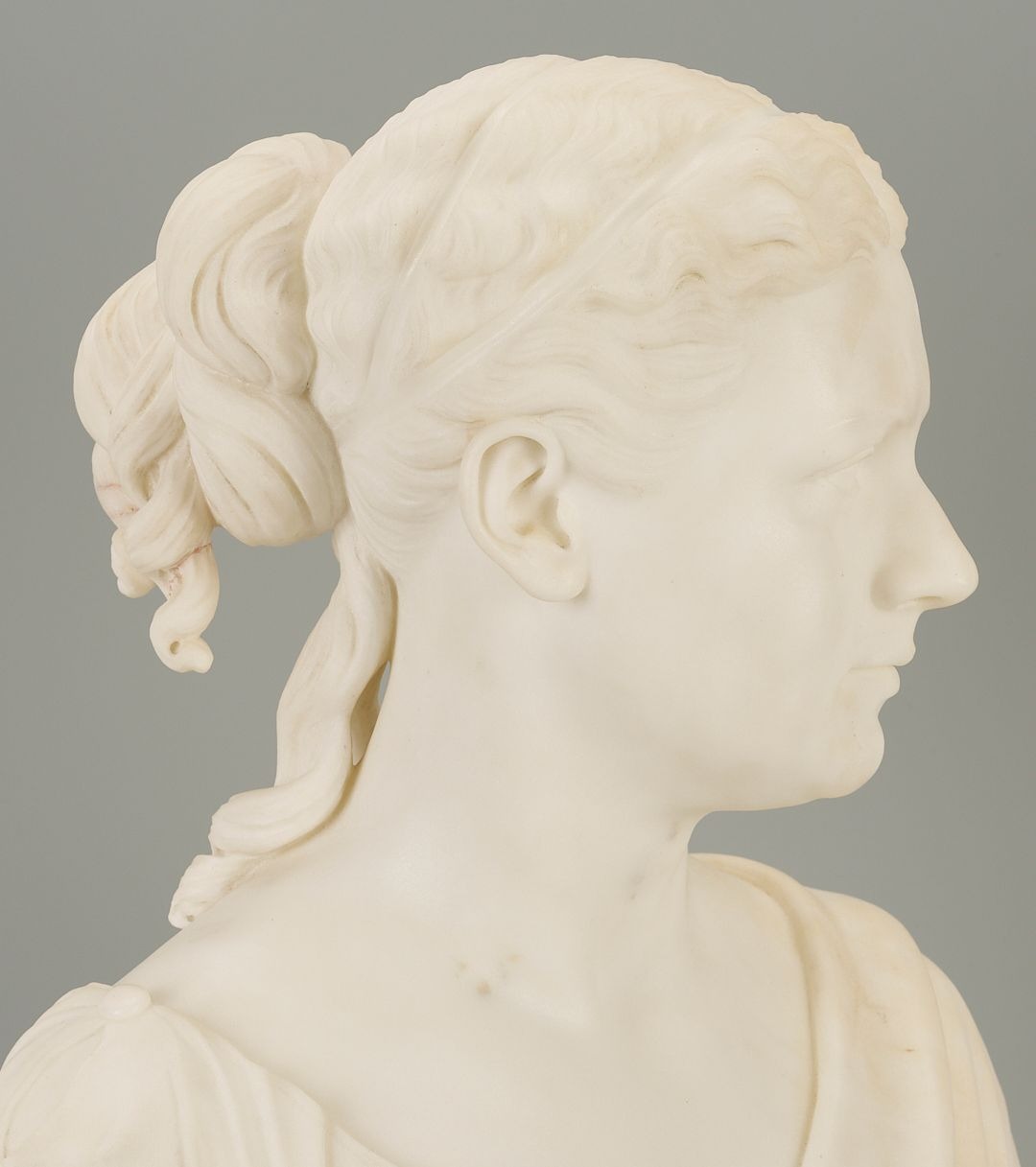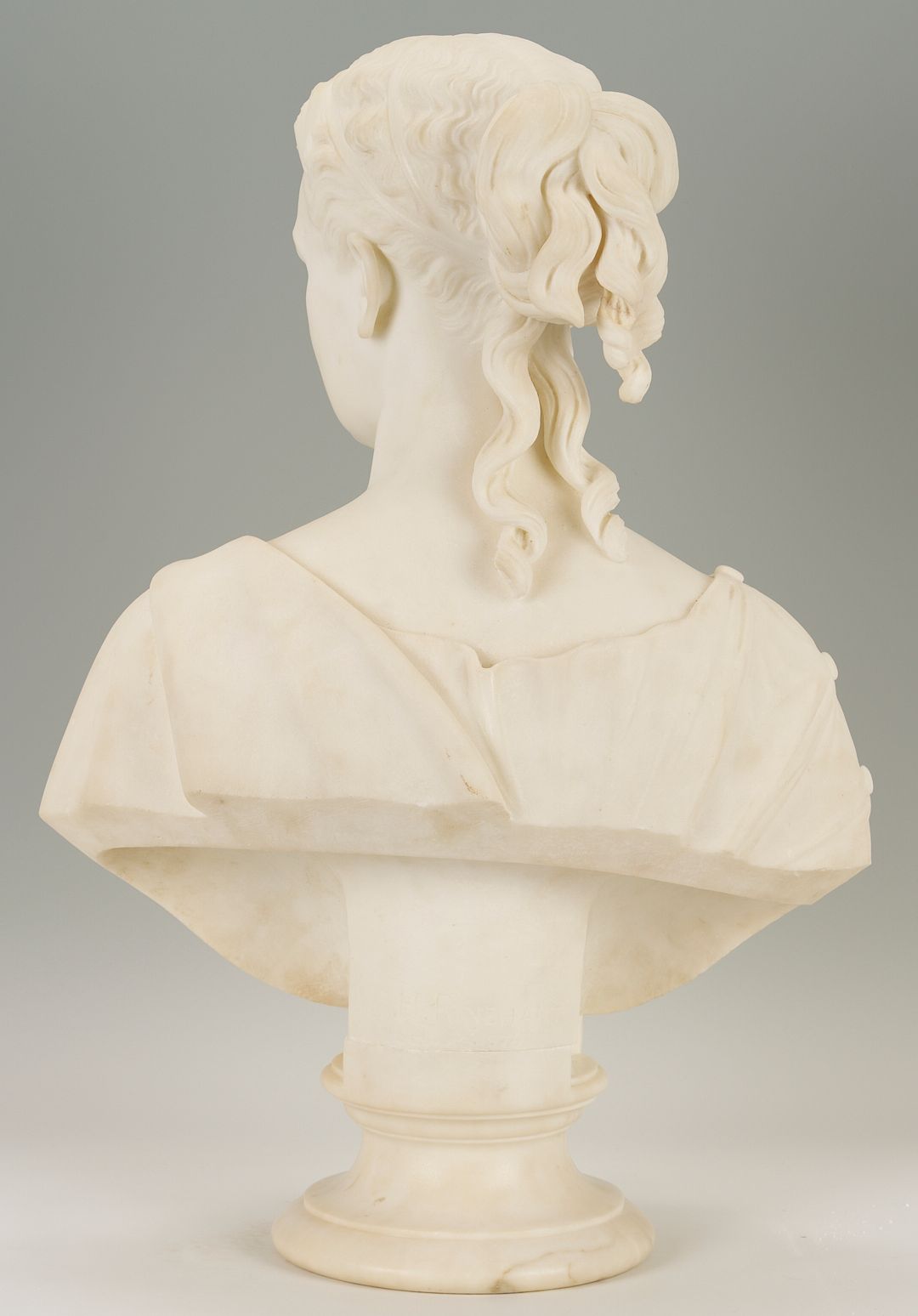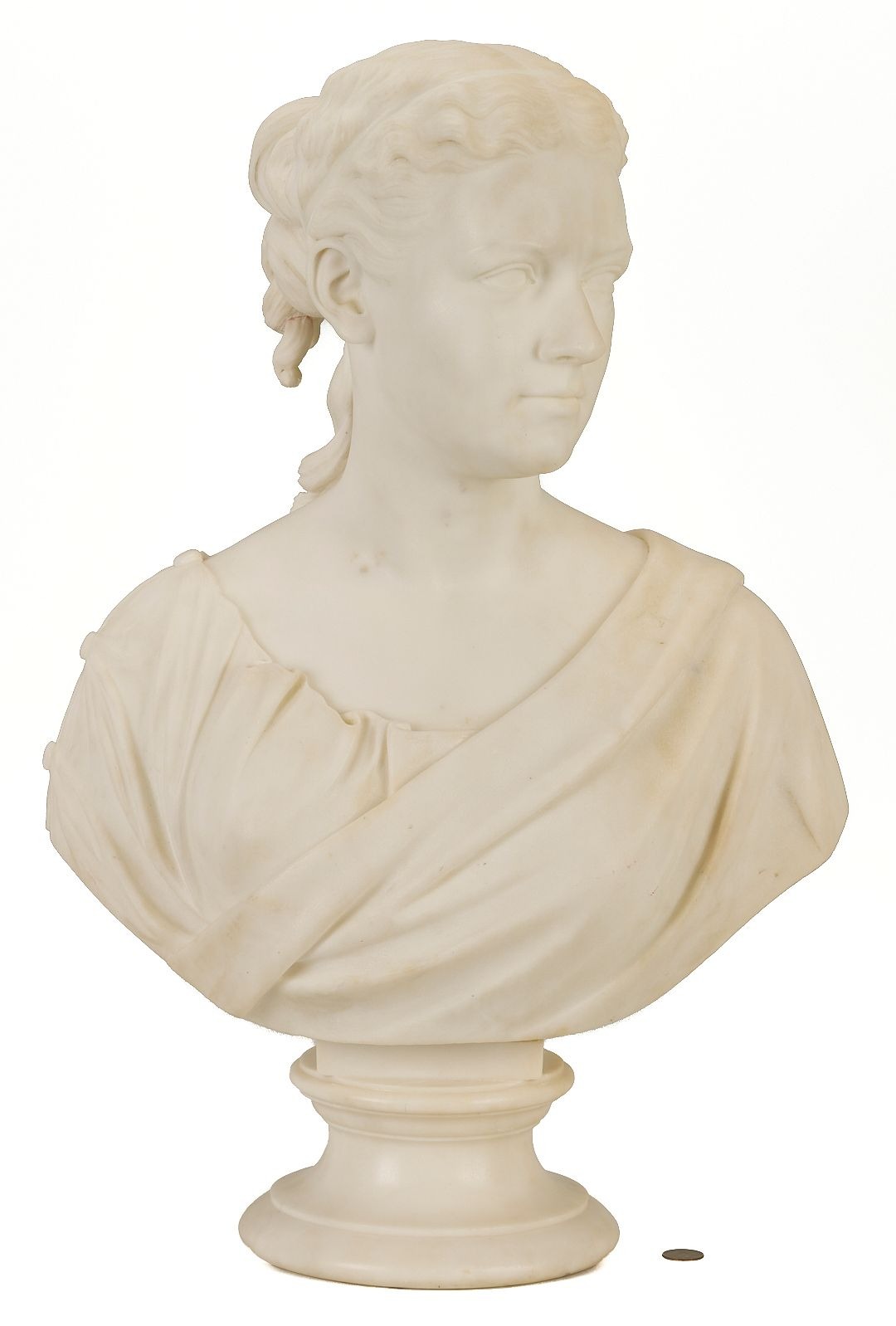
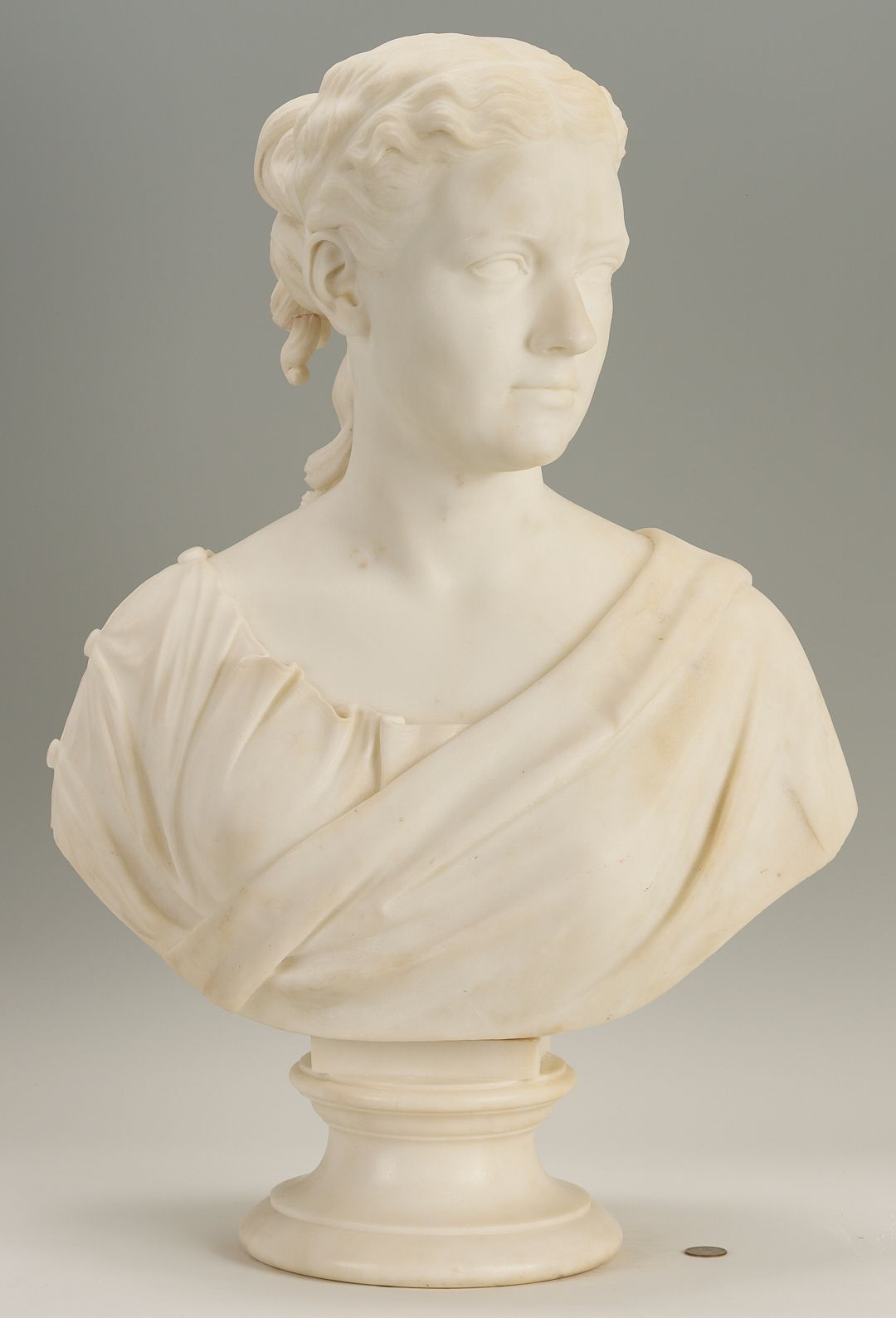
Bust Sculpture of a Young Woman
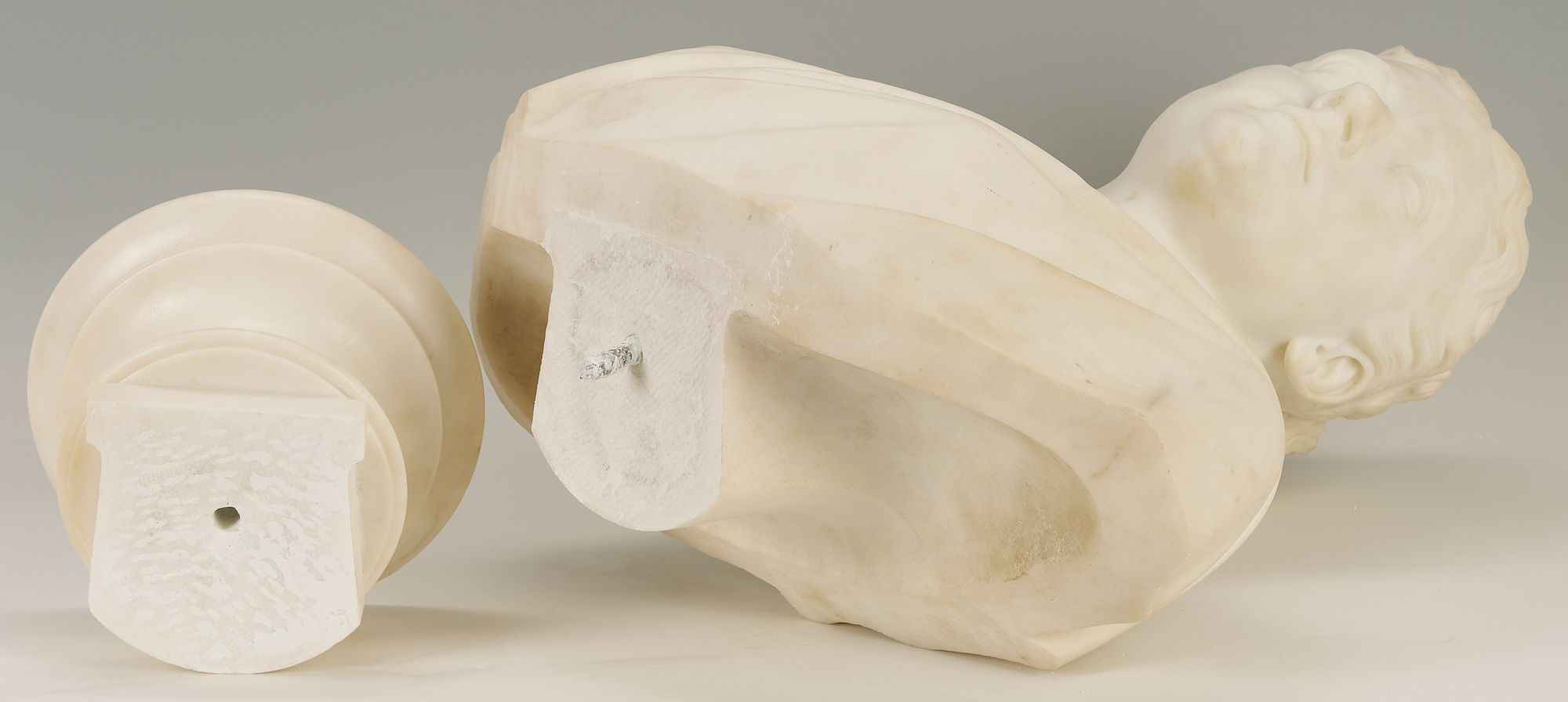
Carved Marble
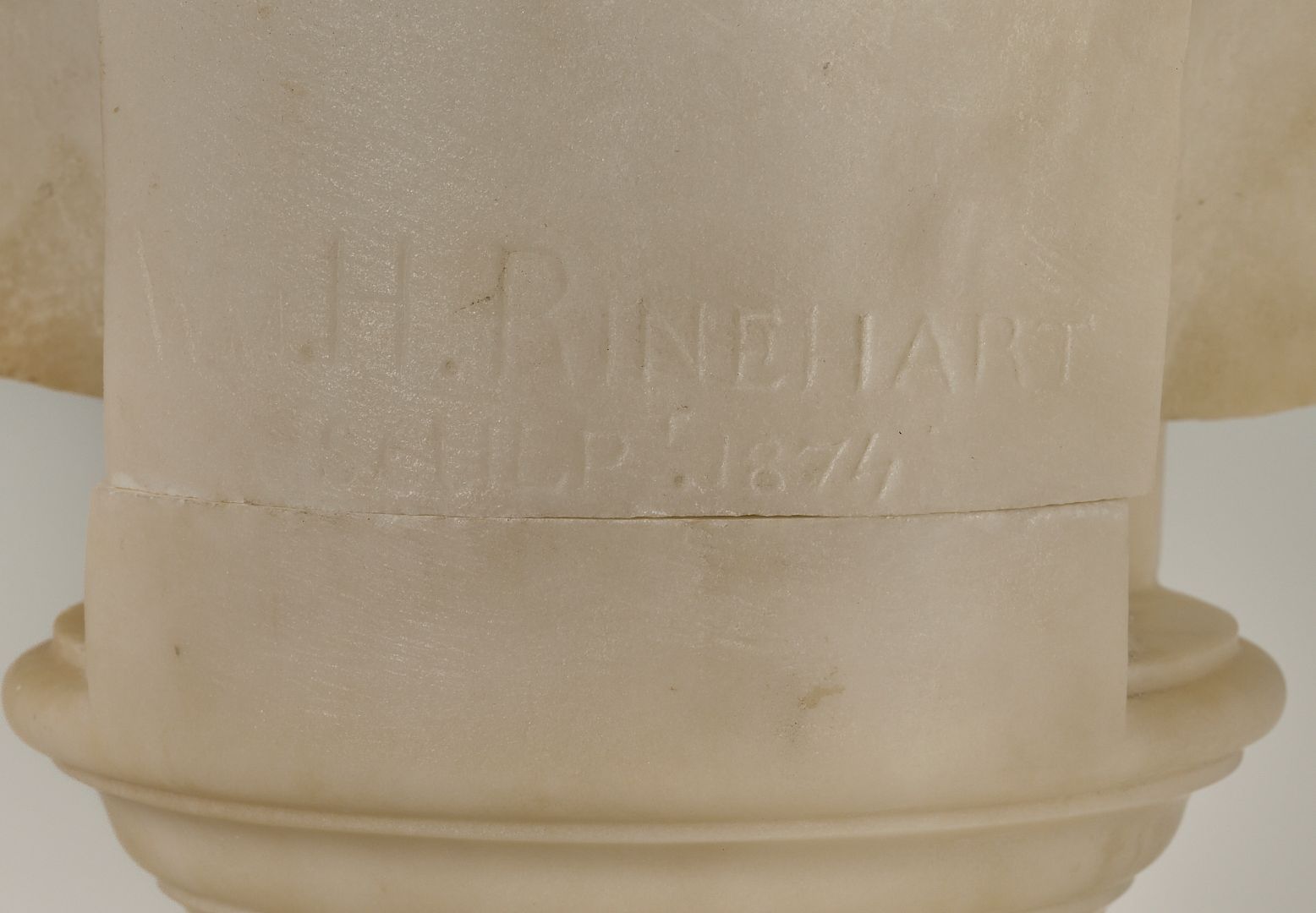
Signed & Dated “Wm H Rinehart, Sculpt. 1874″
For William Henry Rinehart (1825-1874)
Rome, Italy
1874
26.5″ H, 19″ W, 12” D
“William Henry Rinehart more than any other sculptor perpetuated the neoclassical tradition throughout the third quarter of the 19th century while still retaining some of its original verve…There is no question that he was among the most gifted of the 19th century sculptors.” wrote arts scholar Wayne Craven in his classic survey Sculpture in America. Multiple works by Rinehart can be found in the collection of the Metropolitan Museum, The Walters, the Smithsonian American Art Museum, National Gallery of Art, MFA Houston, and many others.
Rinehart died unexpectedly in 1874 at the relatively young age of 49in Rome where he lived and maintained an active studio. Baltimore newspapers reported not long afterwards that a statue of Endymion, fourteen busts, a medallion and a number of bas-reliefs, all the property of Mr. J>W> Garrett of Baltimore from the artist’s studio had arrived in the city as part of his estate. No description has been found of the individual busts and it is likely that this, unidentified example dated 1874, among his last completed works, was a part of this shipment. Likely the bust was commissioned by a specific patron and depicts an individual who remains unidentified.
.The Smithsonian American Art Museum which holds a number of Rinehart sculptures in its collections provided this brief overview of his life who was born in Union Bridge, Maryland, near Baltimore. in 1825.
“When William Henry Rinehart was a boy, he began carving sculptures from stone found in a quarry on his family’s farm. His father caught William carving a portrait of his mother when he was supposed to have been plowing the fields. The elder Rinehart was disappointed to realize that his son had no desire to farm, but surrendered to the inevitable and encouraged William to educate himself in art. In the mid-1840s, Rinehart moved to Baltimore, working as a stonecutter by day and taking art classes at night. The art patron William T. Walters was so impressed with William’s skilled repairs to a mantelpiece that he sponsored the young man’s study in Italy. The artist remained in Europe for most of his life, creating portraits and allegorical works for wealthy Americans who made his studio a stop on their “Grand Tours.” ”
Among his Rinehart’s major works were the Doors of the US Capital in bronze and classical sculptures held today in the collections of the Met, Walters, Smithsonian, National Gallery and many others.